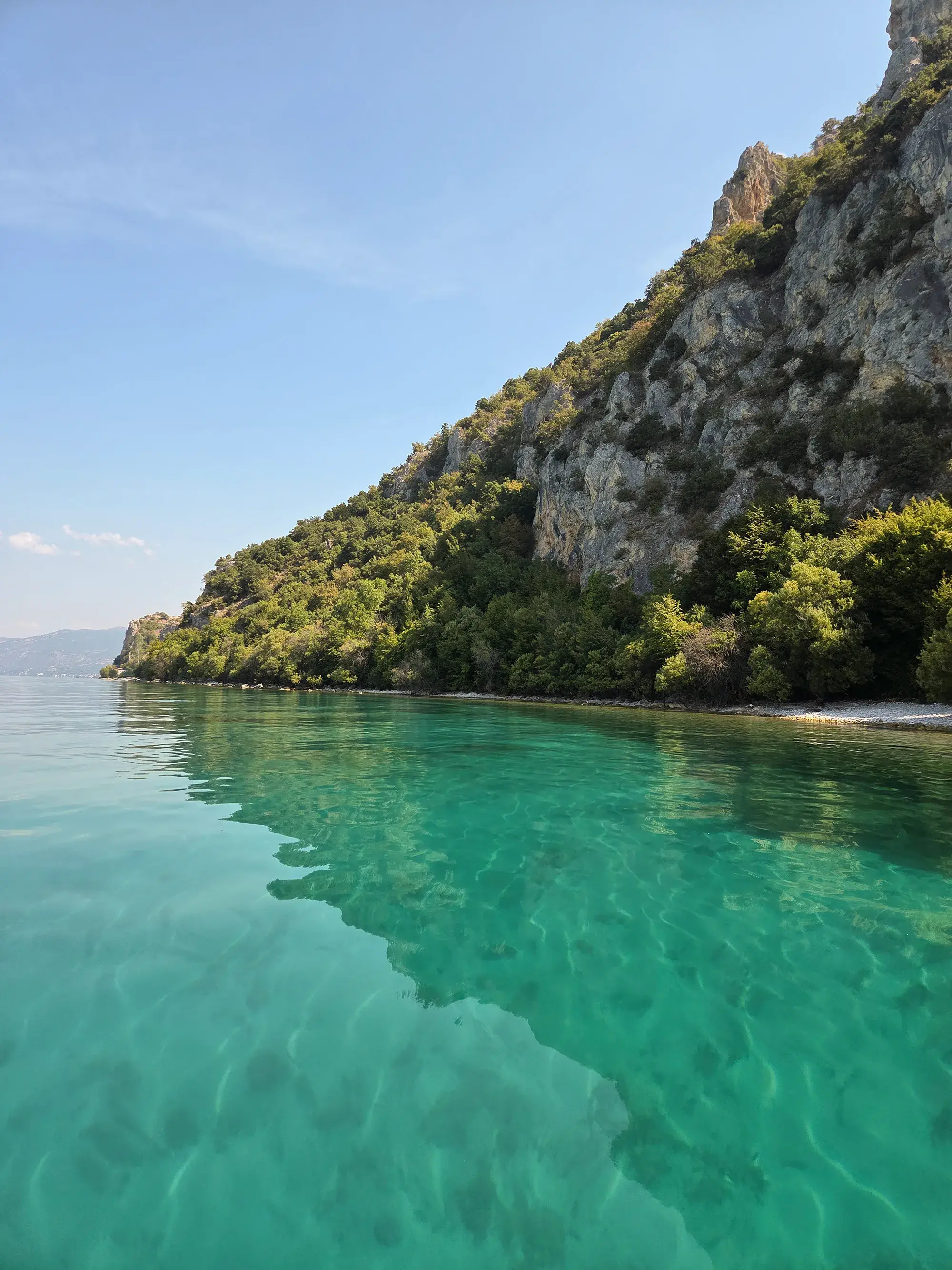
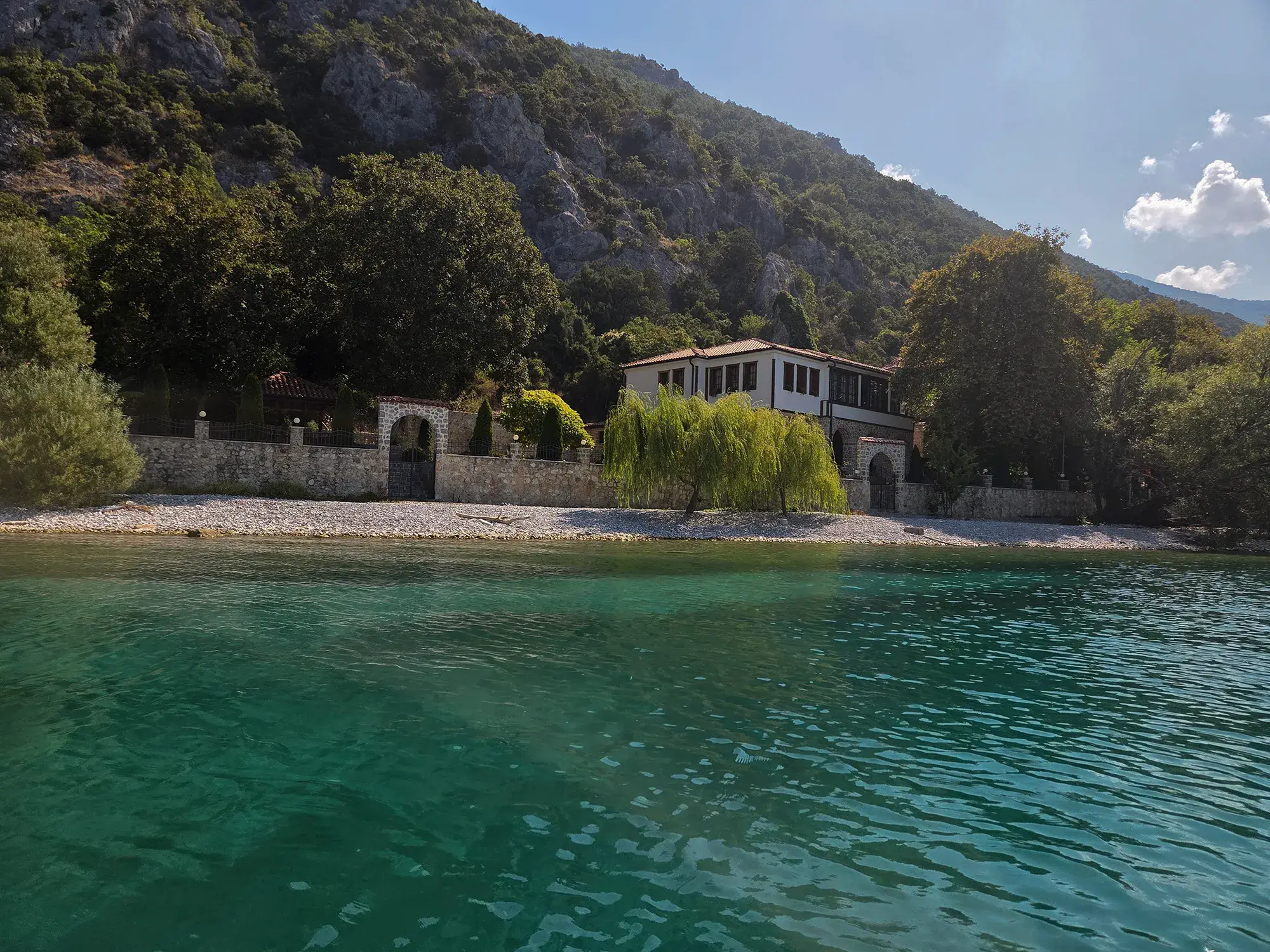
Just south of the fishing village of Trpejca, where the rocky spine of Galičica drops straight into Lake Ohrid, there is a medieval church that you cannot reach by road.
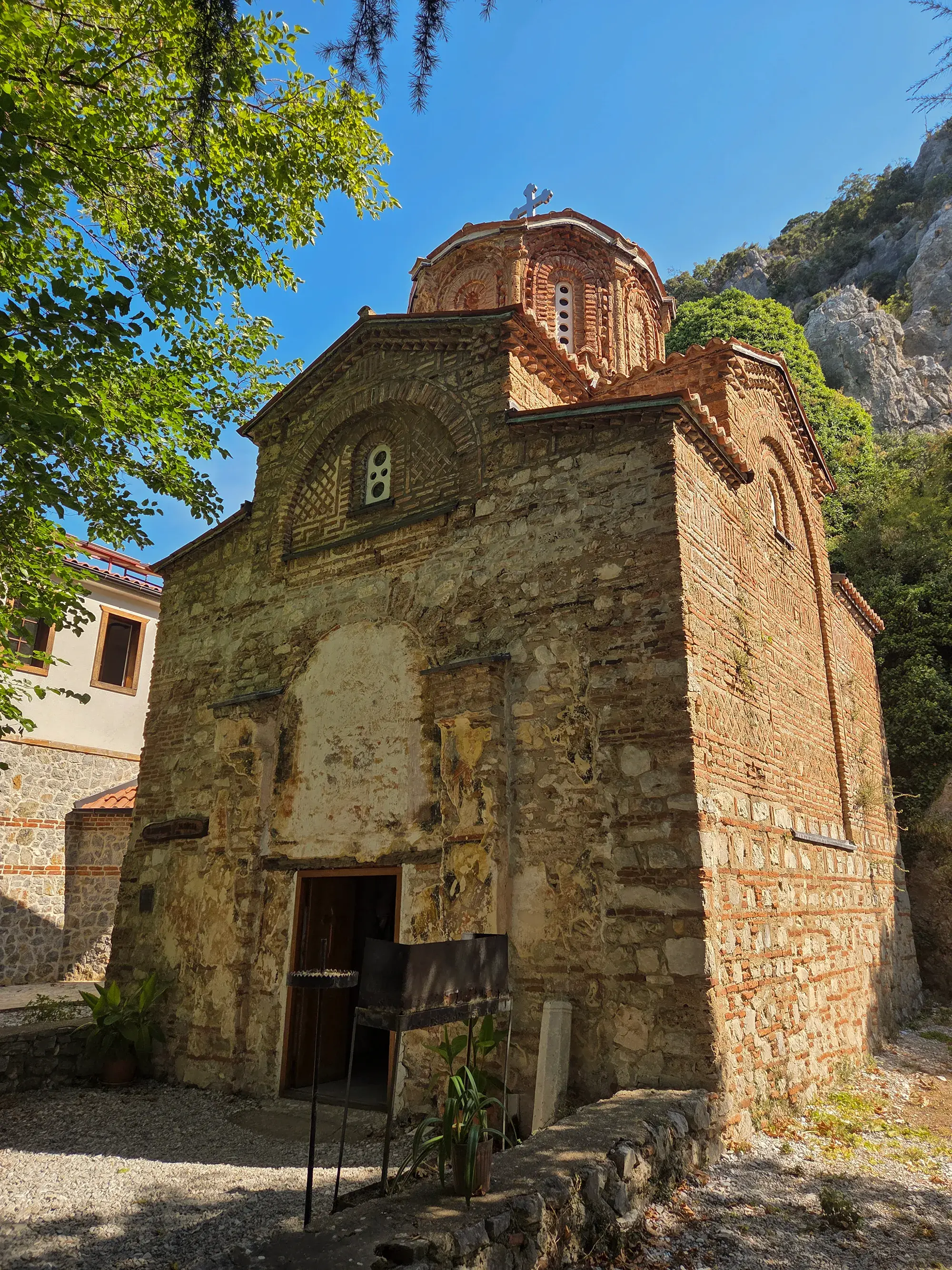
It is one of the most unique churches in Ohrid, and probably, one of the top three you have to visit. We are talking about the church of the Church of the Holy Mother of God Zahumska, or simply called by locals, Zaum.
The church has been on the shores of Lake Ohrid since the 14th century, squeezed between cliffs and the deepest point of the lake. Here is the fun part. You cannot get there by land. You can only get there by a boat or a paddle.
A Church Built On the Deepest Part of the Lake
Zaum was built in 1361, according to the founding inscription above its entrance door. Two powerful figures of the Ohrid Archbishopric were responsible, Caesar Grgur Golubić funded the architecture, while the Bishop of Devol, Grigorij, commissioned the frescoes.
The building follows the inscribed-cross plan common to late Byzantine churches around Ohrid, with a central dome rising on an octagonal drum supported by four pillars. Its proportions are unusually tall and slender, giving Zaum a distinctly vertical presence that sets it apart from other medieval churches in the region.
Inside the Church
Entrance to the Church is 150 MKD (2.5e), but inside, you will find frescoes painted for more than 660 years.
The fresco cycle is partially damaged, namely in the vault and dome. However, what remains is remarkable. Christ Pantocrator fills the cupola, surrounded by angels and prophets in the drum below.
The most striking composition is a rare depiction of St. Anna Mlekopitatelnica — St. Anne nursing the infant Virgin Mary. It is an image that appears almost nowhere else in Byzantine art, and the artist rendered it with unusual tenderness, emphasizing the intimacy of the moment.
The Legend Behind the Name
Every local in Ohrid knows this story. The folklorist Marko Cepenkov recorded the version that has been passed down for generations.
A queen, so the legend goes, spent three years spinning thread into a single enormous cord. She loaded it onto a boat and rowed to the middle of the lake, determined to measure its depth once and for all. The moment she lowered the cord, the calm water turned violent. Waves rose as high as mountains, threatening to capsize the boat and drown the queen and her attendants.
Terrified, the queen dropped to her knees and prayed. She vowed that if God spared her life, she would build a monastery on whatever shore the waves carried her to. The instant she made that promise, the storm subsided. She drifted to the rocky eastern bank and climbed ashore.
Standing on the rocks, shaking, the queen said: "Let this be ZA UM — for the mind — so I never forget what nearly happened to me out there." She ordered a monastery built on that exact spot, and named it Zaum, a reminder to anyone who visits this part of the lake to respect its depth and power.
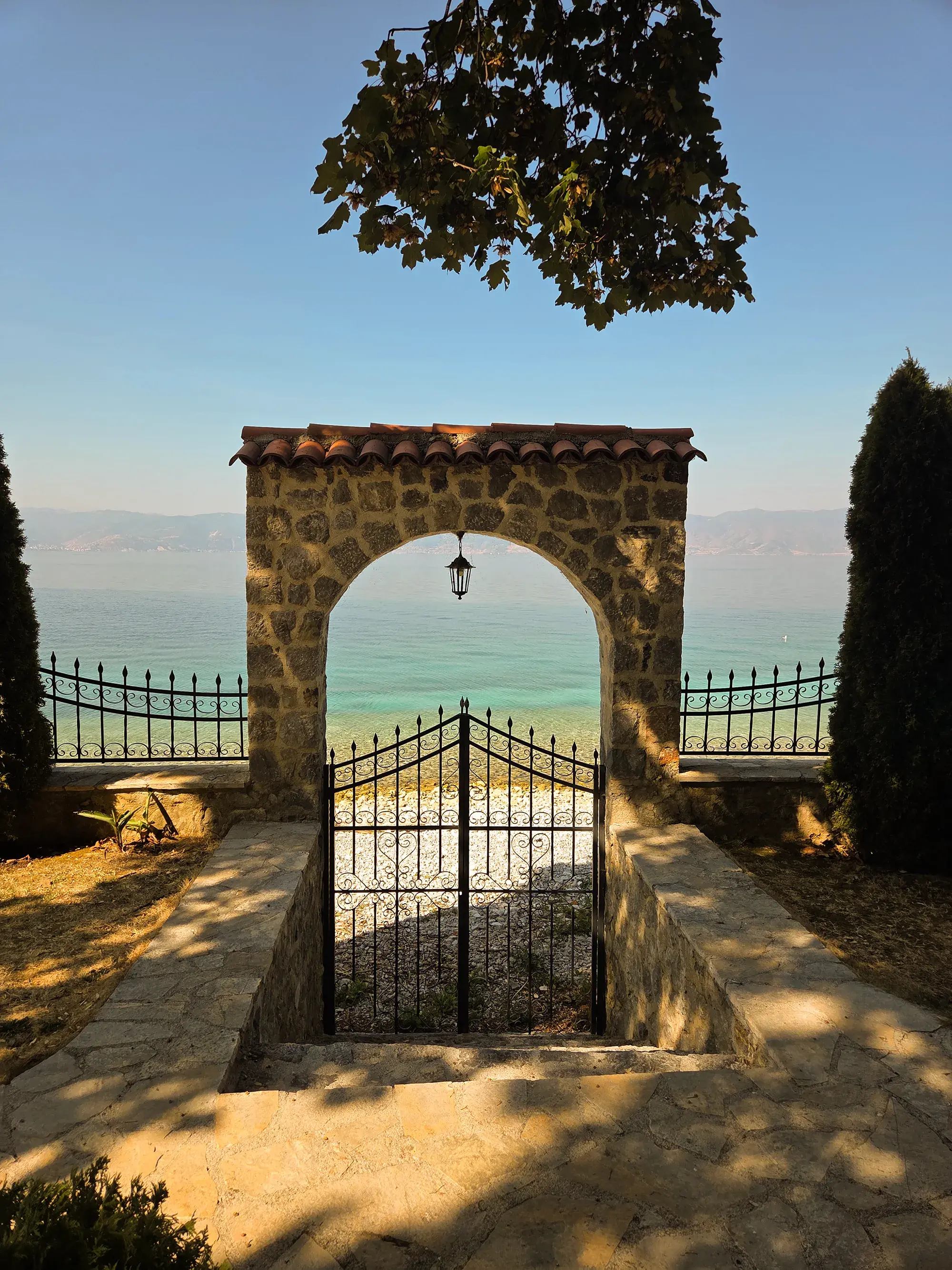
The deepest point of Lake Ohrid lies just offshore, directly in front of the church.
How to Get There
Zaum sits about 20 km from the city of Ohrid, but there is no road to the church itself. You need to get to Trpejca village first, then cross a short stretch of lake.
Trpejca village is roughly a 30-minute drive from Ohrid. There is also a bus that runs to Trpejca if you do not have a car.
By boat from Trpejca. Local boatmen will take you to Zaum and back for around 1,200 MKD (approximately €20). The ride is short and scenic, and you can enjoy the of Galičica's cliffs.
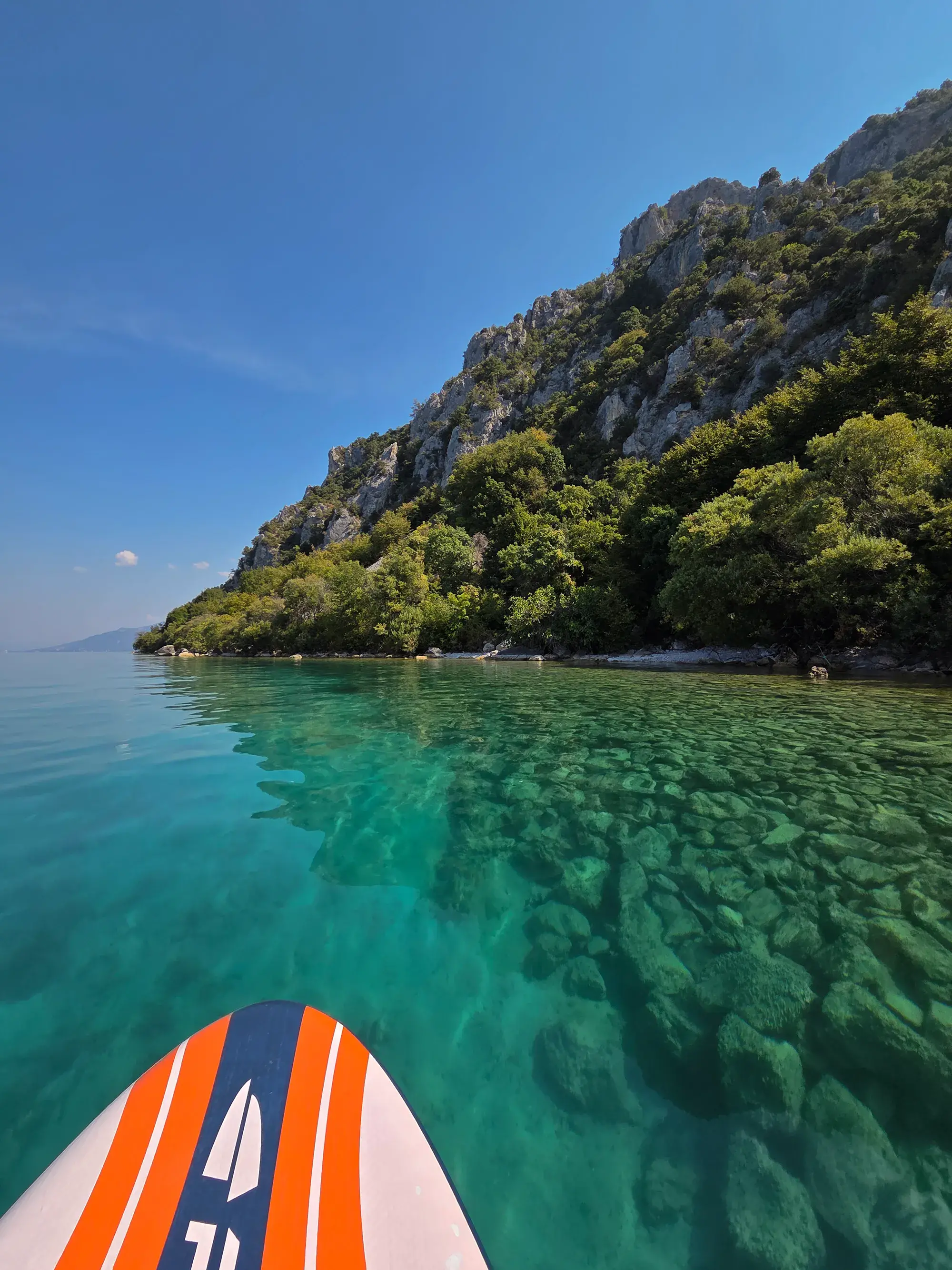
By SUP paddleboard. This is the most rewarding way to arrive. The paddle from Trpejca takes about 30 minutes each way, and you get the eastern shore of the lake entirely to yourself. As you get there, you can enjoy scenic views, birdwatching, and complete silence. Go early in the morning to enjoy the lake all by yourself.
If you have your own SUP, it will cost you nothing. However, if you need to rent, rentals start at 5e for 30 minutes, and go up to 10-15e for a half-day rent. That gives you enough time for a round trip and a break at Zaum.
What to Do When You Arrive
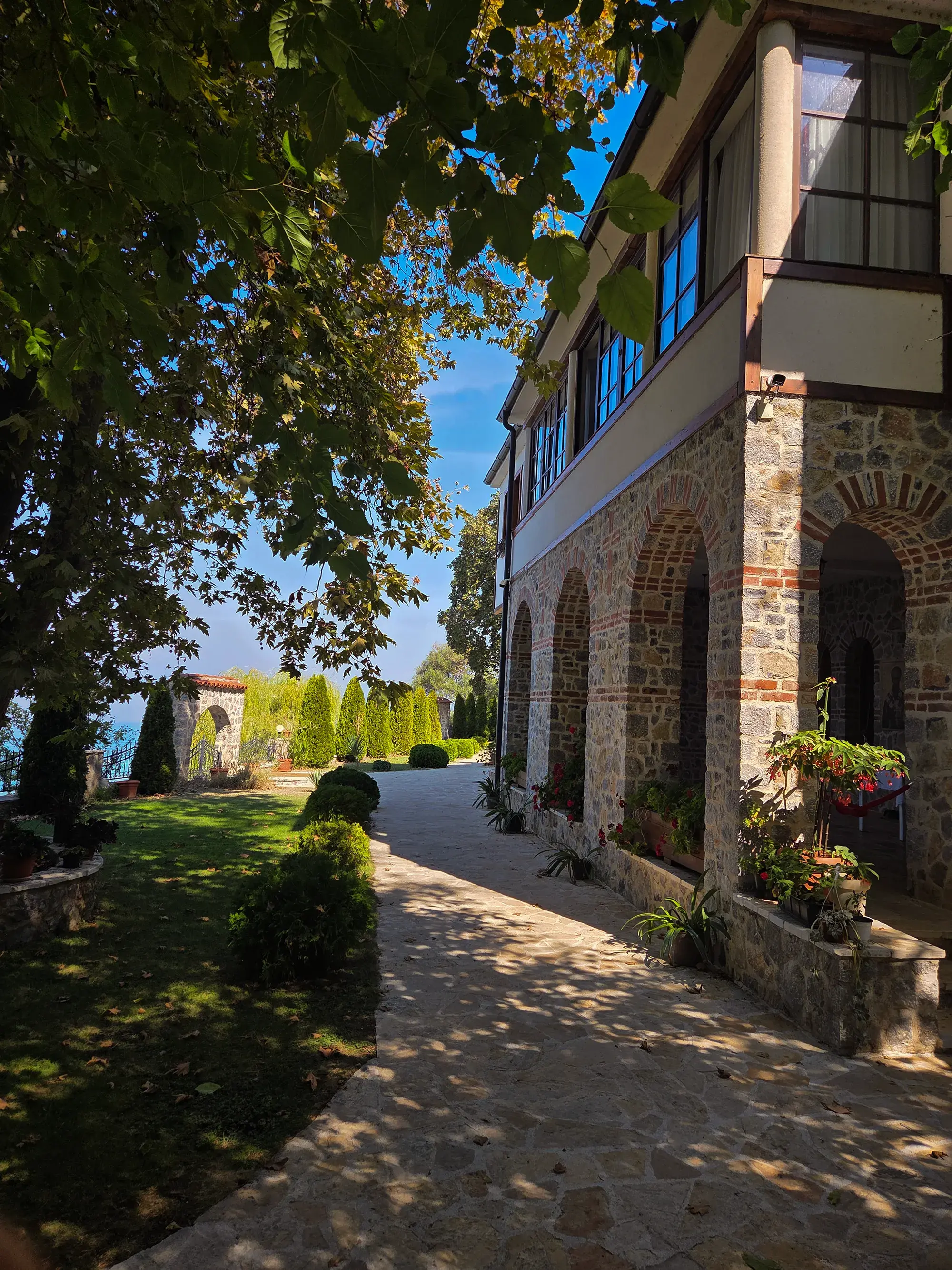
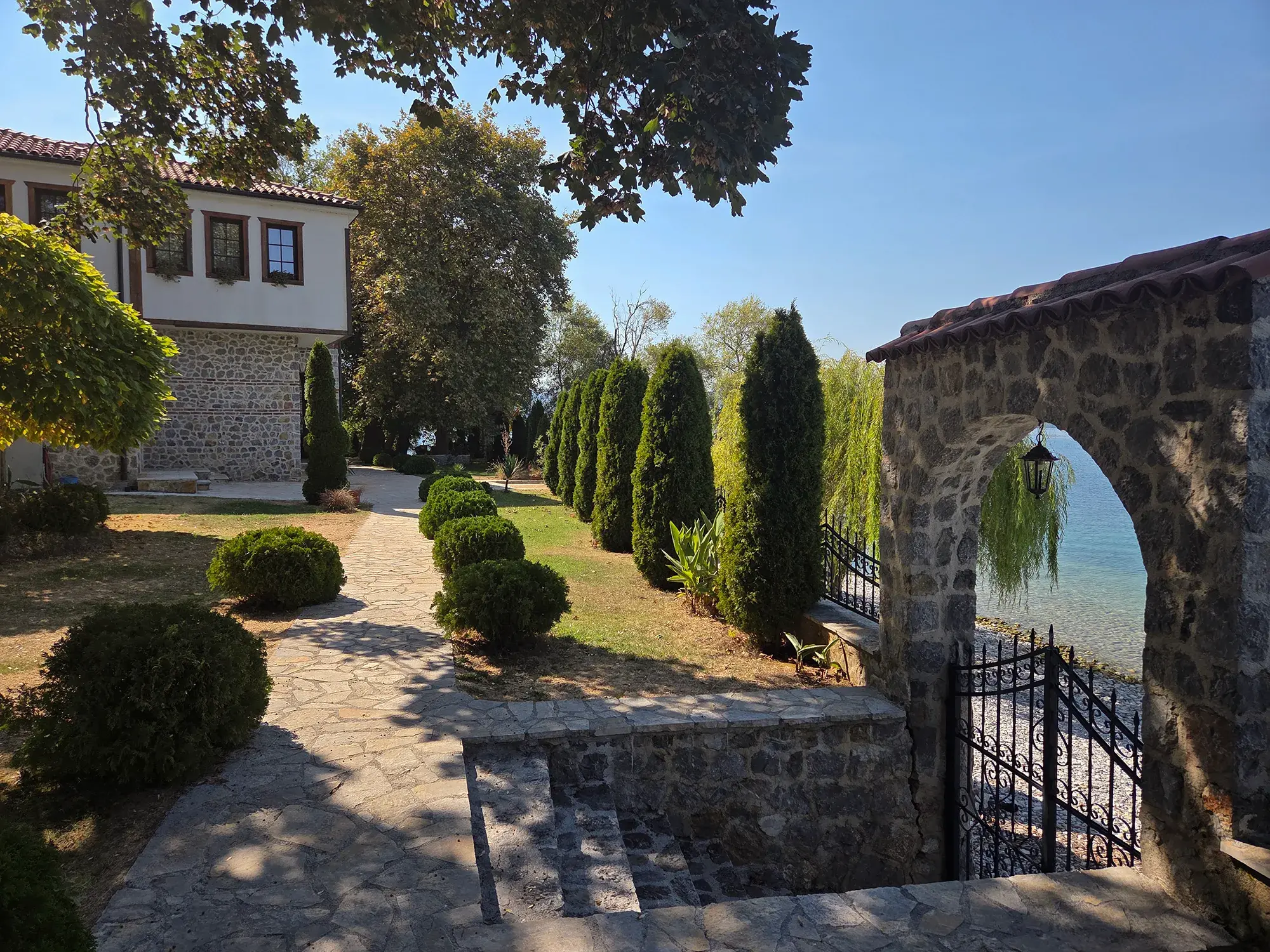
Zaum is more than just a church visit. You can find plenty of seating areas, and even a barbecue spot around the monastery. Settle in for a few minutes or hours, depending on how much time you have.
Pack a coffee, bring food for a picnic. There is no rush here. The remote position of Zaum makes it a perfect spot to slow down.
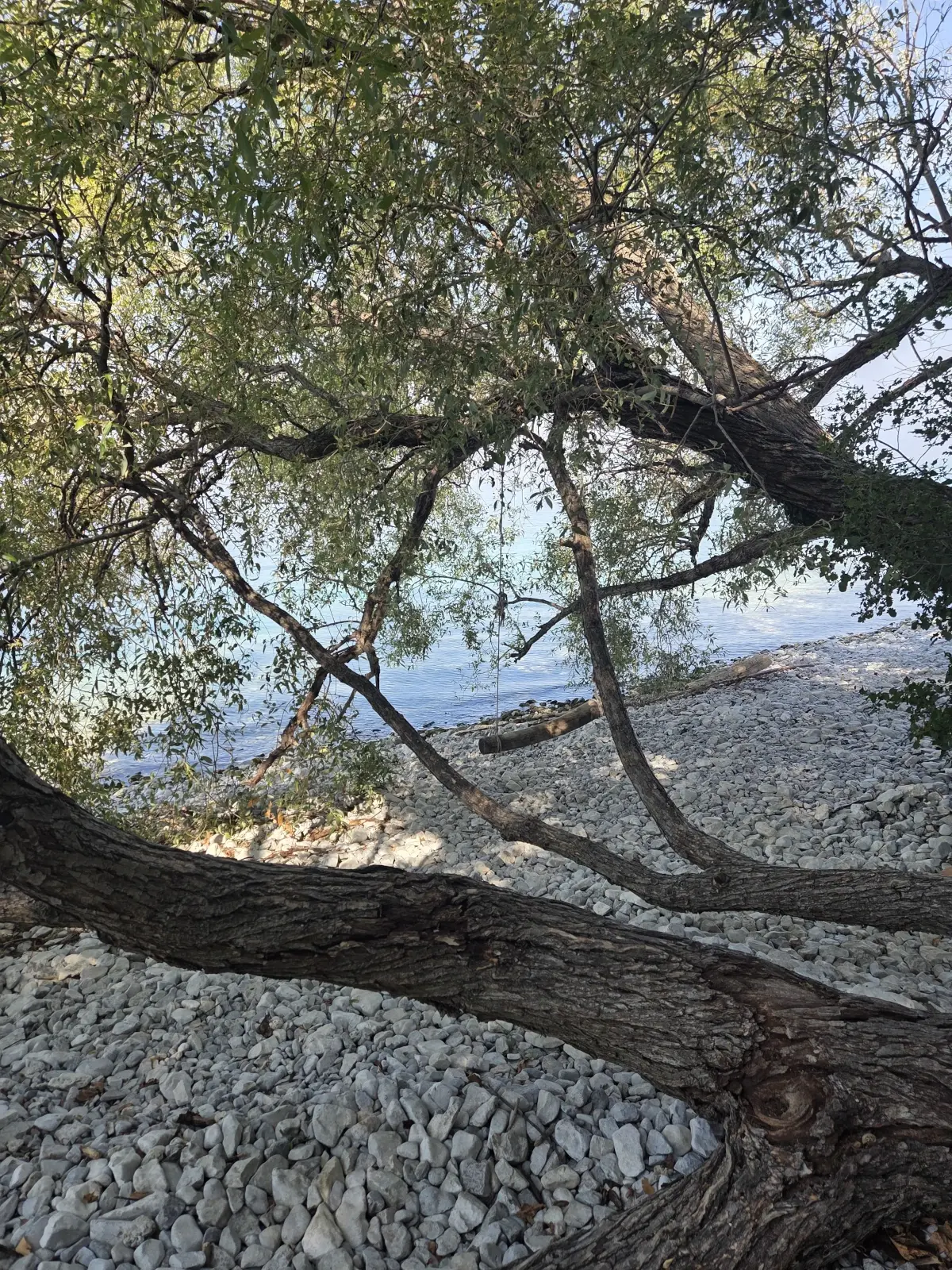
Don’t forget to try the swing. Right in front of the entrance, half-hidden under the trees, there is a swing. It is one of those things nobody tells you about until you stumble upon it, and it has become something of an icon for visitors. Take a seat. The view from that swing, is the kind that might end up on your phone as a wallpaper.
The church entrance costs 150 MKD (about €2.50). A small price for a 14th-century fresco cycle you will not find replicated anywhere else.
Dress respectfully. Zaum is an active church and a sacred site. You cannot enter in swimwear, no bikinis, no bare chests. If you are arriving by paddleboard or boat and plan to visit the interior, bring a light cover-up or a change of clothes. The locals who care for this church take its sanctity seriously, and visitors should do the same.
The lake at Zaum is spectacularly clear. You have to swim here, but keep in mind that there are currents here. The lake can change from calm to rough in a minute, so do not go too deep. The legend about Zaum is more than a story. It is a warning and practical advice.
Religious Celebrations
Zaum holds services twice a year. On July 4, the day after the summer feast of St. Naum of Ohrid, there is a liturgy followed by a traditional folk gathering with a communal Lenten meal, organized by the village of Trpejca. The second service falls on September 21, the feast of the Nativity of the Mother of God, and draws worshippers from Trpejca, Peštani, and Ohrid.