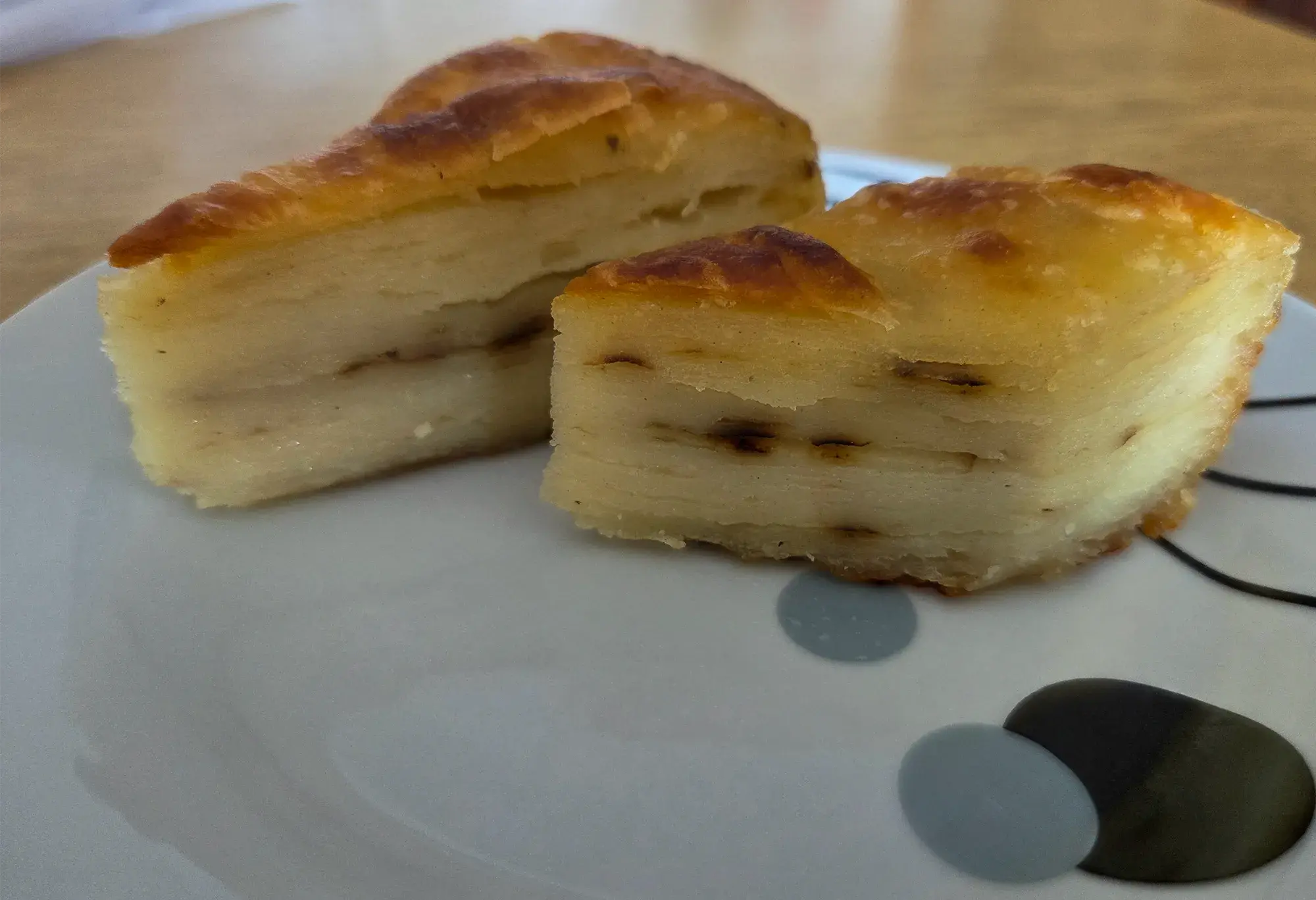
You can order trout almost anywhere in Macedonia. But when you sit down at a lakeside table in Ohrid and the waiter sets down a whole grilled fish that swam in the lake that morning, you are eating something that exists nowhere else on earth.
The Ohrid trout is an endemic species that has lived exclusively in Lake Ohrid since the Tertiary period, millions of years before the lake became a tourist destination, before Ohrid became a city, before Rome was an empire.
The lake's extreme age, over three million years, and its isolation gave the fish enough time to evolve into something that looks like a trout, eats like a trout, but is genetically distinct from every other trout on the planet.
© Maël BALLAND (pexels.com)
What Makes the Ohrid Trout Different
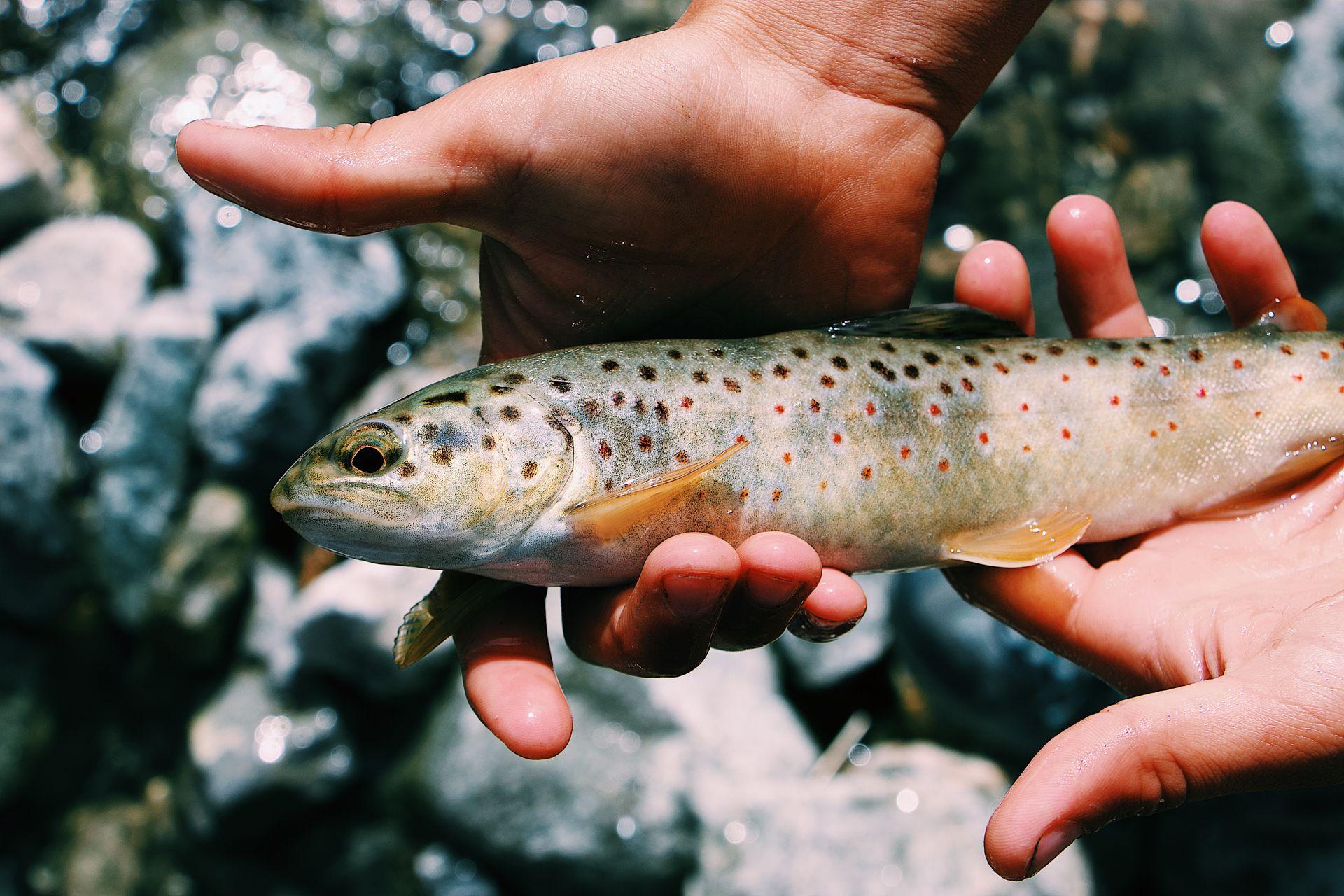
The fish reaches sexual maturity at four to five years. Adults range from 25 to 60 centimetres and can weigh up to 15.8 kilograms, though market-weight fish are typically between 400 and 600 grams.
Its slightly flattened body, small head, and distinctive star-shaped grey spots along its sides set it apart visually. Local fishermen have used those spots for centuries to identify it in the water. The flesh ranges from pale white to orange-pink, depending on what the fish has been eating, a detail that surprises visitors who expect all trout to look the same.
Two Thousand Years at the Table
Long before it became a menu item for tourists, Ohrid trout was currency. According to photographer and Ohrid native Chris Elinchev, writing for OhridPress, the fish has been treated as a luxury product for more than two millennia.
During the Roman Empire, merchants exported Ohrid trout live, in water-filled containers, to administrative centres across the empire — a journey of days by ox cart across Balkan mountain roads.
Under the Byzantine Empire, Ohrid became a major religious and administrative centre, and the trout rose with it — reaching the tables of imperial officials, bishops, and nobility, appearing at court banquets and church feasts. Under the Ottomans, demand reached its peak: they classified it as saray baligi, palace fish, and shipped it regularly to Istanbul for the Sultan's table.
Local fishermen developed techniques to match the fish's sensitivity. They used nets only during strict seasonal windows, avoided spawning grounds, chose mesh sizes that let young fish escape, and fished at night when possible. The traditional fishing boat, the chun, was a small flat-bottomed wooden vessel handbuilt from oak, cornel, and pine. Knowledge of where the fish moved passed from fisherman to fisherman: how to read wind changes, how the fish show up in water reflections, where the underwater springs are, how the fish move through lunar cycles.
What it tastes like
The flesh is finer in texture compared to river trout and more delicate in flavor. Ohrid trout doesn’t carry the same mineral heaviness of lake fishes.
Instead, you get a clean, mild, and slightly sweet taste. We can describe it as having "a subtle taste that differs from ordinary trout" with a "pleasant, unobtrusive freshness."
Traditional cooking keeps seasonings minimal. Olive oil, lemon, fresh rosemary, and sea salt. The method is designed to let the fish stand out. Restaurants in the old town will sometimes add a layer of onion, green pepper, garlic, and tomato, cooked separately and spooned into the opened grilled fish before serving. That version has been on Ohrid tables for generations.
Can you go fishing?
Fishing for Ohrid trout without a valid permit is illegal.
That rule exists for a reason. The lake's trout population in general has faced pressure from decades of intensive commercial fishing. Due to overfishing, fish taken from the lake have been trending smaller and lighter.
The Hydrological Institute in Ohrid and the Shum hatchery in Struga operate breeding programmes specifically to restock the lake and maintain the population. The trout you eat at a licensed restaurant comes through this regulated system.
If you want to fish recreationally, permits are available through the relevant Macedonian fisheries authority. Fishing without one is subject to fines and, depending on the circumstances, prosecution under environmental protection law.
Try it at home: trout the Ohrid way
This recipe follows classic local preparation: grilled fish with a simple cooked vegetable filling. If you can find Ohrid trout outside the region (it is available through some specialist fish suppliers in the region), this is how to cook it. Otherwise, it works well with any fresh whole trout.
Ingredients (for 1 fish, serves 2):
- 1 whole trout, cleaned and boned
- 3-4 medium onions, finely chopped
- 2 green peppers, finely chopped
- 4-5 garlic cloves, finely chopped
- 1 tomato, finely chopped
- 1 lemon
- Fresh parsley, a small bunch
- Salt and black pepper
- Olive oil or sunflower oil
Method:
Score the cleaned fish two or three times on each side with a knife. Season with salt and pepper inside and out. Place on a hot grill or in a grill pan over medium-high heat. Grill for 6-8 minutes per side, depending on the size of the fish, until the skin is crisped and the flesh pulls away from the bone cleanly.
While the fish grills, heat oil in a pan over medium heat. Add the onion and cook until soft and golden, about 8-10 minutes. Add the peppers and garlic and cook for another 5 minutes. Add the tomato and cook for a further 3-4 minutes until the mixture is soft and the excess liquid has reduced. Season with salt, pepper, and chopped parsley.
Open the grilled fish flat on a plate. Spoon the vegetable mixture along the centre. Fold the fish back over the filling or leave it open-faced. Finish with lemon juice and a few parsley leaves.
Serve with bread. Not chips.
Five Places to Try the Ohrid trout
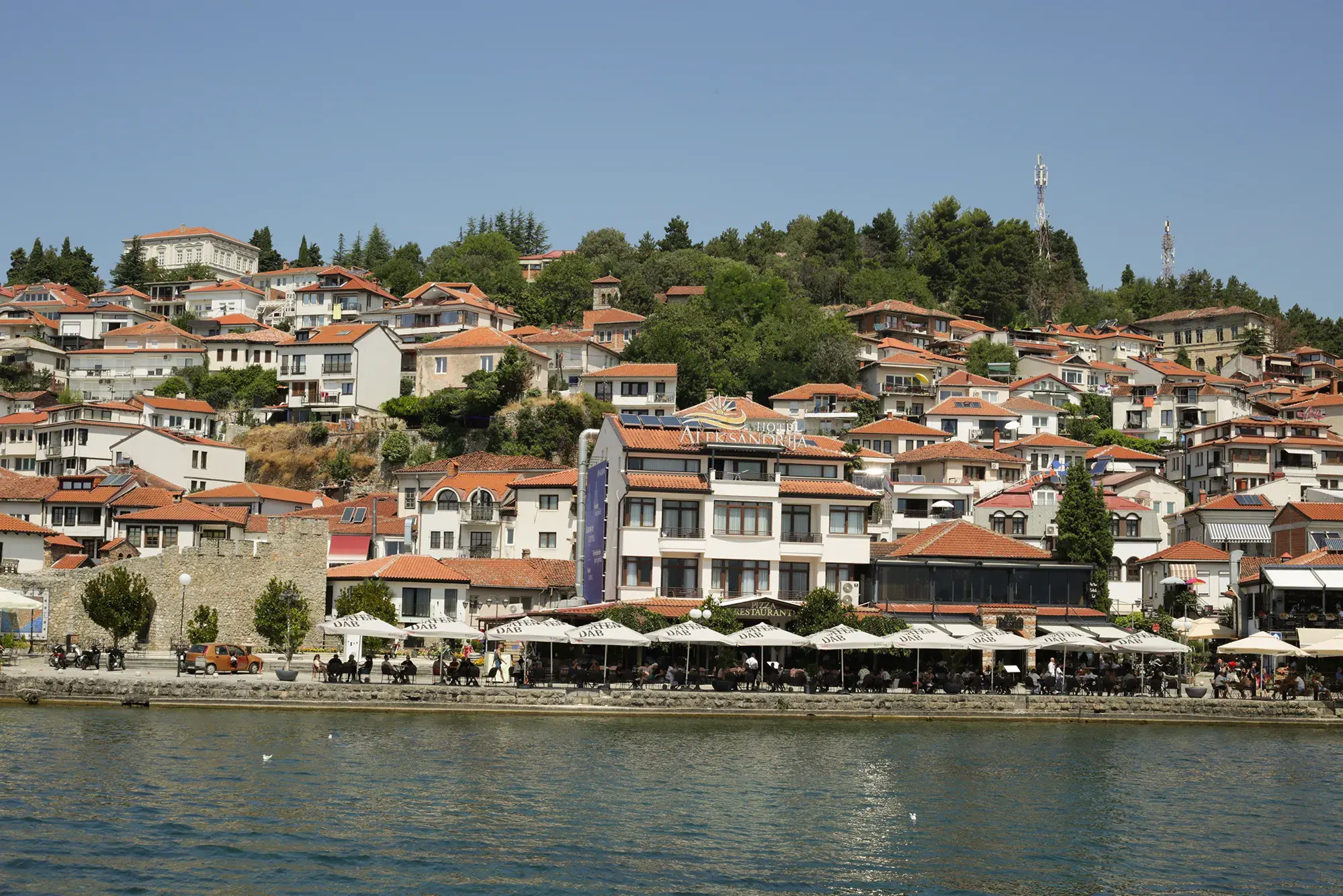
The first three are in the old town. The last two are worth the drive if you want to eat the fish somewhere quieter than a summer terrace in central Ohrid.
Kaneo Restaurant & Letna Bavcha
Located on Koco Racin street in the old town quarter, Kaneo Restaurant offers trout fillet and trout pasta. These are standout dishes.
The menu runs wider than most lakeside spots, including mussels, soups, and a good Macedonian wine list. Tables at the water's edge fill early. Book ahead to guarantee a better seat.
Open daily 9:00 am to 10:00 pm.
Kaj Kanevche
Kaj Kanevche sits on Koco Racin street near the Kaneo neighbourhood. You can order trout and belvica in the same meal. The kitchen takes local catch seriously, and here you might try the freshest trout.
The lakeside terrace has a clear view of the water and the old town cliffs.
Open daily 10:30 am to 11:00 pm.
Restaurant Sveta Sofija
On Tsar Samoil street in the upper old town, Restaurant Sveta Sofija has over 1,200 Google reviews and a 4.2 rating. Reviewers praise the traditional Macedonian cooking and fresh fish preparation. The location is at a short walk from the Church of Saint Sophia and Samuel's Fortress, which makes it a natural stop if you are already walking through Old Ton on foot.
The atmosphere is as warm and relatively unhurried compared to the busier lakeside spots.
Open daily 9:00 am to midnight.
Restaurant Ostrovo, St. Naum
Ostrovo sits at the southeastern edge of the lake, next to the cold springs beside St. Naum Monastery, about 29 kilometres south of Ohrid. It has over 1,800 Google reviews and a 4.0 rating. If you are going to St. Naum for a day trip, it is worth to try.
The atmosphere, sitting right by the springs with a glass of a good wine is what you pay for. Prices are higher than in Ohrid, but the view is better. Visit the monastery, and if you are here during June to August, take a short boat ride on the springs.
The restaurant is open Tuesday to Sunday from 7:00 am to 8:00 pm, and Monday from 8:00 am to 5:00 pm.
Dva Bisera, Radozda
Dva Bisera is in Radozda, a small village on the western shore of Lake Ohrid, about 26 kilometres northwest of Ohrid and 15 minutes by car from Struga. If you like a quieter setting and something different than Ohrid, Radozda is a great place.
The village is a stretch of shoreline that most visitors to Ohrid never reach. A short walk above the restaurant leads to the cave church of St. Archangel Michael, built into the cliff face. Ask the restaurant staff for keys.
Open Tuesday to Sunday 9:00 am to 11:00 pm, Monday noon to 9:00 pm.
When to go and what to expect
You can try trout year long, but the trout season corresponds with the lake’s population. Usually, the season begins late spring through autumn, when you can get the best fish at the table.
During winter months, fish is still good quality, and the restaurants are quitter.
Prices for a portion of grilled Ohrid trout at a lakeside restaurant in the old town typically run between 700 and 1,200 Macedonian denars (roughly 11-20 euros) depending on the size of the fish and the restaurant. Usually restaurants charge by kg (1kg – 2.2lbs). By kilo, most restaurants charge between 2,000 and 3,000 Macedonian denars (35 to 50 euro).